
Table of Contents
- Start With a Full Inventory
- Follow a Caravan Weight Distribution Guide
- Make the Most of Vertical Space and Locker Storage
- How to Secure Items in a Caravan for Travel
- Best Camping Chairs for Caravanners: Choosing Compact Gear
- Common Caravan Storage Mistakes to Avoid
- Conclusion: Pack for the Trip, Not Just the Van
- Frequently Asked Questions
Last Updated: September 9, 2026
Packing a caravan usually starts with good intentions and ends with you sitting on a bag of onions while you find the kettle. Organising caravan storage for road trips is about knowing what you have, where it lives, and how much your van can safely carry. At Old Mate Camping Co., we think about making gear smaller and lighter, so this guide covers the practical steps to get your van sorted before you hit the bitumen.
The goal is simple: everything has a home, nothing shifts on a corrugated road, and you are not over your weight limits. By the end, you will pack faster, drive safer, and actually find the kettle.
Start With a Full Inventory
Empty the van completely before you pack a single thing. Pull out every chair, esky, tool box and stray sock. This is the only way to see what you are actually carrying, and it is the step most people skip.
Sort everything into piles: kitchen, bedding, clothing, tools, outdoor gear and food. Be honest about what you used on the last trip. That second camp oven you have not touched in two years? Leave it at home. A common mistake is packing for the trip you imagine instead of the one you take.
Write it all down on a list or spreadsheet. This becomes your master record. You work from it instead of guessing, and it helps you spot duplicates like three bags of pegs before they take up space.
Go Digital: Your Van's Load-Out List
A paper list works, but a digital one works harder. A shared spreadsheet or notes app lists every item and where it lives. Set it up once and it pays you back on every trip.
Structure it by zone, not by category. That is the trick most people miss. Instead of one long list of everything you own, break it into the physical spaces in your van: front boot, offside cupboard, under-bed, overhead lockers, fridge. Each item gets a line with its home. When you pack, you work through the zones and tick items off as they go in.
This stops the frantic 7am search for the gas bottle spanner, and it gives you a record of what you actually used. After a trip, mark items you never touched. Three trips in a row with the same unused item means it stays home next time.
Build a Pre-Departure Checklist
Separate from the inventory, keep a short pre-departure checklist of the things that end trips if forgotten. This is not about the esky. It is about the stuff you cannot buy on the road easily.
- Registration and insurance papers for the van and tow vehicle
- Spare keys for the van, tow hitch and wheel locks
- Wheel chocks and the jack, plus a spare tyre that is actually inflated
- First aid kit and any prescription medication
- Phone chargers and a paper map as a backup
- The tool roll for the van's specific fittings, like the wind-down handle for the jockey wheel
Keep this list pinned to the top of your inventory document. Check it once when you start packing and once before you pull out of the driveway.
The 24-Hour Rule for New Gear
Every item you add takes up space and adds weight. Before buying anything new, apply the 24-hour rule. Put it in a cart or on a list, then wait a day. If you still need it and it has a clear home, buy it. Most impulse purchases fail that test.
The inventory is a living document. Update it when you add or remove gear, and after every trip. A van organised on paper is far easier to organise in real life.
Follow a Caravan Weight Distribution Guide
Most storage guides treat weight like a tidy-up problem. It is a safety problem. A badly packed van can sway, drag, or put you over the legal limit. So before you arrange a single shelf, sort out your numbers.
Know Your Three Numbers
Every van has three figures you need to find. They are on the compliance plate, usually on the drawbar or inside a cupboard door.
- ATM (Aggregate Trailer Mass): the total weight of the van and everything in it when fully loaded. This is your hard ceiling.
- Tare Mass: the weight of the van as it left the factory, empty. Subtract this from the ATM to get your real payload. That is the total weight of every water tank, esky, chair, doona and tin of beans you can carry.
- Tow-ball weight: the downward force the loaded van puts on the tow bar. It should sit within the range your tow vehicle manufacturer specifies, usually 10-15% of the ATM for a conventional van.
Most people only check the ATM. The more common problem is hitting the payload limit before the van looks full. Water weighs 1kg per litre, so a full 100L tank is 100kg of payload gone before you pack a sock (bom.gov.au).
The Axle Rule and the Tow-ball Trap
Heavy items belong low and centred over the axle. The mechanism behind it matters.
Heavy gear behind the axle acts like a lever, lifting weight off the tow ball. Too little tow-ball weight means the rear of the tow vehicle sits light, the front wheels lose grip, and the van can sway at highway speed. Sway is the leading cause of van rollovers.
Heavy gear at the very front pushes too much weight onto the tow ball. That squats the rear of the tow vehicle, dulls steering, and can push you over its limits.
The fix is to weigh the rig loaded, not empty. Public weighbridges are common across Australia. Pull on with the van hitched, weigh the whole rig, then unhitch and weigh the tow vehicle alone. The difference is your actual tow-ball weight. The official guidance on towing and load limits walks through the process and the legal obligations.
Where the Heavy Stuff Actually Goes
Work from the axle outwards. Water tanks and batteries are usually factory-fitted over the axle, which is exactly where they should be. For everything you add, follow the same logic.
- Over the axle, low down: tools, jacks, spare parts, full eskies, bottled water, camp ovens.
- Ahead of the axle but low: heavier pantry items, canned goods, toolboxes. Keep them as close to the floor as you can.
- High lockers and above the axle: clothing, bedding, light chairs, anything under 5kg per item.
- Behind the axle: nothing heavy. This zone is for items under a couple of kilograms, like a fold-up table or a bag of pegs.
Rebalance After Every Big Trip
Your load changes with every trip. A week at the beach means full water tanks. A trip inland means extra fuel and more water. Check your tow-ball weight whenever the load changes significantly. A quick trip to the weighbridge beats guessing.
Getting the weight right is not glamorous. But it is the difference between a van that tracks straight and one that tries to overtake you. Sort the weight first, then worry about the coffee cups.
Make the Most of Vertical Space and Locker Storage
Floor space in a caravan is precious. Vertical space, from floor to ceiling, is often the most underused area.
Install hooks on cupboard doors for aprons, hats and bags. Use tension rods in wardrobes to stop clothes sliding. Add shelf risers in overhead lockers to double the usable height. Door organiser pockets are brilliant for shoes, toiletries and kids' gear.
Group items by function. All the cooking stuff lives together, all the bathroom stuff lives together. That way you are not pulling half the van apart to find the tomato sauce.
Kitchen Storage: Collapsible and Nesting Gear
The kitchen is where space disappears fastest. Silicone bowls, collapsible kettles and nesting pots all pack down flat when you are done.
Swap bulky single-purpose tools for multi-purpose items. A good knife replaces a block of six. Nesting bowls with lids cover prep, storage and serving. Store everything inside your largest pot to fill dead space. Drawer dividers stop cutlery becoming a tangled mess.
Clothing and Bedding: Vacuum Bags and Thin Hangers
Clothing takes up far more room than it should. Vacuum seal bags are the best fix for bedding and bulky jackets. They compress a doona to a fraction of its size and keep it dry.
For clothes, roll instead of fold and use packing cubes. Swap thick hangers for thin, non-slip ones to fit more in the wardrobe. Store out-of-season gear in vacuum bags under the bed, and keep only what you need for this trip within reach.
How to Secure Items in a Caravan for Travel
A crash or sudden stop turns loose items into projectiles. Securing cargo is about more than just closing the cupboard doors.
Use anti-slip matting on shelves and in drawers. It is cheap and stops items sliding. Add tension rods across shelf fronts. For heavier gear, use cargo nets or ratchet straps rated for the weight.
Make sure the fridge door is locked and items inside cannot shift. Wrap glass jars or store them in a container with a lid. The same goes for the microwave: leave the turntable out and store it somewhere soft.
Best Camping Chairs for Caravanners: Choosing Compact Gear
Every item you bring needs to justify its space, and chairs are one of the biggest offenders. A bulky chair eats into your storage and payload.
For caravanners, the ideal chair balances comfort with a small packed size. Our pick is the Old Mate Original. It folds down to 44cm long and 8cm wide, about the size of a drink bottle, and weighs just 1.8kg. It slips into a narrow gap beside the bed or behind a seat without sacrificing a whole locker. The aluminium frame and ripstop nylon seat hold up to 150kg, and it sets up in seconds.
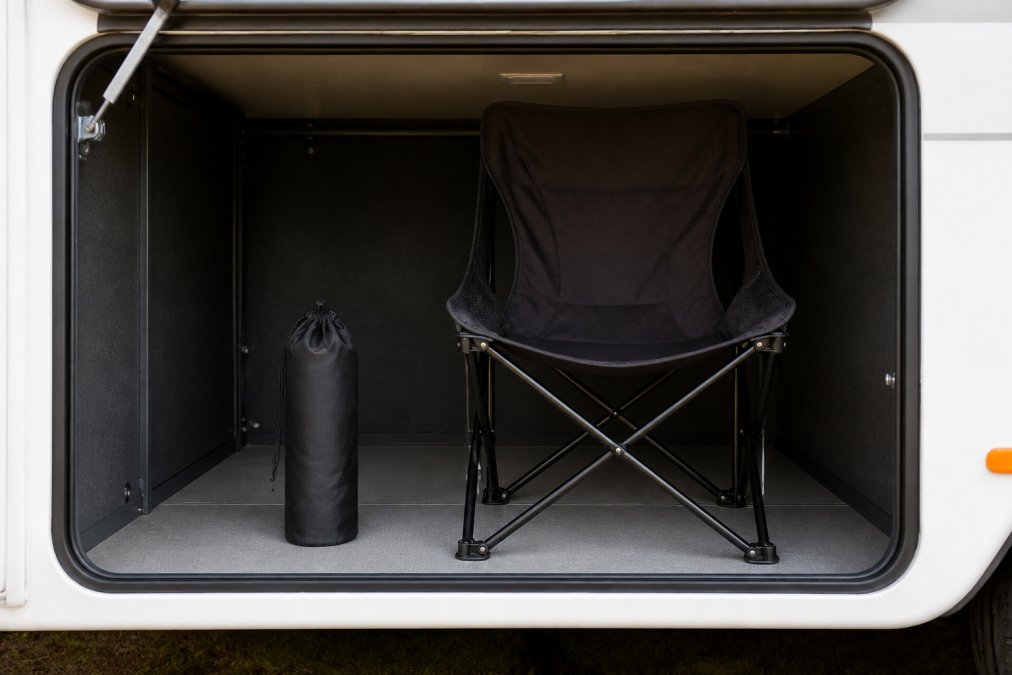
Other chairs serve different jobs. A big, padded recliner is a great choice if you are staying at one campsite for a week and have the room to carry it. That is a different job to a chair you pack and unpack daily. Both are right for their own use.
Common Caravan Storage Mistakes to Avoid
Most storage problems come down to a few repeat mistakes.
The first is packing heavy items high. Putting the tool box on the top bunk raises the centre of gravity and makes the van feel tippy on corners. Keep heavy gear low.
The second is buying storage containers before you know what needs storing. You end up with boxes that do not fit your spaces. Measure your lockers first, then buy containers that fit. Modular storage that stacks uses space far better than random tubs.
The third is ignoring climate. In the tropics, airtight containers keep gear dry. In the desert, they keep dust out. Store bedding and clothing in sealed bags regardless, because damp is the enemy of every caravan.
Conclusion: Pack for the Trip, Not Just the Van
Organising caravan storage for road trips comes down to three things: knowing what you carry, keeping the weight balanced, and making every item earn its space.
The payoff is a van that is safer to tow, easier to live in, and quicker to pack for the next adventure. Choose compact, multi-purpose gear that does not weigh you down. The Old Mate Original is built for exactly that job, giving you a full-size, comfortable seat that packs down to almost nothing. Practical guidance on safe towing and loading from the Australian Government reinforces that a well-loaded van is a safer van, so take the time to do it properly. Get started with Old Mate Camping Co. and make room for the things that matter on the road.
Frequently Asked Questions
What is the 3-3-3 rule for caravans?
The 3-3-3 rule is a simple travel guideline: drive no more than 300 kilometres per day, arrive at your destination by 3pm, and stay for at least 3 nights. It is less about storage and more about reducing travel fatigue and enjoying the trip. For storage, it gives you a clear schedule to pack and unpack efficiently without rushing, keeping the van organised for the whole journey.
How should I distribute weight in my caravan for safe towing?
Follow a caravan weight distribution guide: keep heavy items low and over the axle. Aim for around 10% of total weight as tow-ball weight. Store heavier gear like tools, water containers, and camp ovens in cupboards near the floor and axle. Lighter items, like bedding and clothing, can go higher up. This keeps the van stable when towing, reducing sway and improving handling. Check your van's specific payload capacity before loading.
What are the best ways to store camping gear in a caravan?
Use vertical space with hook systems and hanging organisers inside cupboards and wardrobes. Collapsible kitchenware, nesting pots, and stackable containers save significant room. Use vacuum seal bags for bulky bedding and seasonal clothing. Store frequently used items like chairs and tools in accessible areas near the door. Ensure everything is secured for travel to prevent shifting while driving.
How do I keep my caravan organised on long trips?
Assign a specific home for every item and stick to it. Use drawer dividers for cutlery and utensils, and clear, labelled containers for pantry staples. Pack a dedicated 'travel day' bag with essentials you need before setup, like kettle, tea, and a change of clothes. This prevents you from unpacking everything at every stop. Re-evaluate your layout after the first trip and adjust what is not working.