
Table of Contents
- What Actually Matters in Lightweight Hiking Chairs for Long Treks
- Specs at a Glance: Pack Size, Weight and Load Limits
- Materials, Durability and Maintenance Over Many Seasons
- Ergonomic Camping Chairs for Seniors: What to Check Before You Buy
- How to Reduce Pack Weight for Long Hikes Without Losing Comfort
- Setup, Stability and Comfort on Real Ground
- Making It Last: Care, Repairs and Lower Impact
- Conclusion
- Frequently Asked Questions
Last Updated: September 10, 2026
What Actually Matters in Lightweight Hiking Chairs for Long Treks
If you're carrying your own gear for days, the chair you bring has to earn its place in the pack. Lightweight hiking chairs for long treks are folding seats built to disappear into a pack and still hold you up at camp. The ones worth carrying usually weigh under 2kg and pack to roughly the size of a drink bottle (rei.com).
Here's the blunt version: plenty of chairs marketed as "lightweight" are still awkward to carry. They fold flat but not small, and bulk is what wears you down over a multi-day walk.
Weight, Packability and the Weight-to-Comfort Ratio
The number on the box rarely tells the full story. A 1.8kg chair that packs down to 44cm by 8cm slots into a side pocket or straps to the outside of a pack without a fight. A 1.5kg chair that folds into a wide flat shape can be more annoying to carry, because it forces you to reorganise everything else. That's the weight-to-comfort ratio in practice: grams carried versus how good you feel sitting in it after a long day.
For trekking, target these ranges:
- Weight: 1.5kg to 2.5kg for a chair you'll actually carry
- Packed length: under 50cm so it fits a pack side pocket
- Packed width: under 10cm so it doesn't bulge
Specs at a Glance: Pack Size, Weight and Load Limits
Here's the quick version of what to check before you buy any chair for a long walk.
| What to Check | Why It Matters on a Long Trek | Target Range |
|---|---|---|
| Weight | Every gram is carried on your back | 1.5kg to 2.5kg |
| Packed size | Determines where it fits in your pack | Under 50cm long, under 10cm wide |
| Weight capacity | You want margin, not a limit you sit at | Well above your body weight |
| Frame material | Affects weight and how it handles knocks | Aluminium |
| Seat material | Affects comfort and how it wears | Ripstop nylon or similar |
| Setup time | Matters when you're tired and it's getting dark | Seconds, not minutes |
The Old Mate Original, for example, weighs 1.8kg, packs to 44cm by 8cm, and carries up to 150kg. That capacity isn't a target to sit right at. It's margin.

Materials, Durability and Maintenance Over Many Seasons
A chair that lasts comes down to two things: the frame and the seat. Everything else is detail.
The frame
Most trekking chairs use aluminium because it is light, stiff enough and does not rust (PubMed). The common alloys are 7075 and 6061. Both handle damp coastal air and a wet tent floor without corroding the way steel would.
The seat
Ripstop nylon is the standard for good reason. The grid of reinforcing threads stops a small nick from running into a long tear, which is what you want when the seat brushes against a sharp rock or a bit of firewood.
Repairs you can do yourself
Small fixes keep a good chair out of landfill, and most are doable at home or at camp.
- Shock-cord failure. The elastic inside a pole section loses its stretch over time.
- Fabric tears.
- Bent legs.
- Loose stitching.
The care routine that actually matters
Durability is mostly about what you do between trips.
- Shake off sand and dirt before packing, because grit works into joints and abrades fabric.
- Wipe the frame with a damp cloth after beach or coastal trips to remove salt.
- Let everything dry completely before it goes back in the bag. A chair stored damp will fail long before one that is dried properly.
- Store it out of direct sun when it is not in use.
- Check frame joints, hub bolts and seat stitching before each big trip.
Replacement shock-cord and repair patches
Ergonomic Camping Chairs for Seniors: What to Check Before You Buy
Comfort matters more as we get older, and the right chair makes a real difference to a long day outdoors. When you're looking at ergonomic camping chairs for seniors, focus on seat height, back support and how easy the chair is to get out of.
Low chairs are hard on knees and hips. A seat that sits a bit higher and has a firm back gives proper support and makes standing up far easier. Look for a shaped back that supports your lower spine rather than a flat sling.
If a family member has back trouble, a chair with genuine lumbar support is worth prioritising over saving a few hundred grams. Comfort matters more than shaving weight when the chair is going to the sideline, the caravan or a day at the beach rather than into a pack.
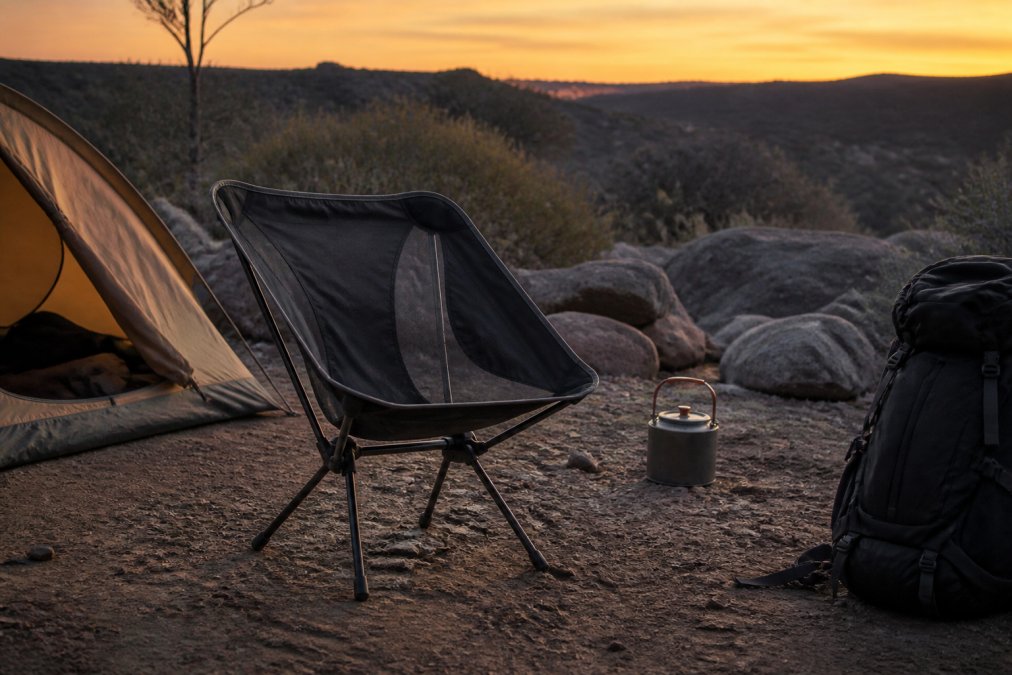
How to Reduce Pack Weight for Long Hikes Without Losing Comfort
Knowing how to reduce pack weight for long hikes is really about deciding what earns its place. The trick isn't cutting comfort. It's cutting the things that don't add any.
A few moves that work:
- Weigh everything once, then question anything you haven't used on the last two trips
- Share group gear like stoves and shelters so no one carries the lot
- Choose multi-use items where you can
- Carry water only where you need it and refill on the way
- Pick gear that packs small, because bulk forces bigger packs, which weigh more
A chair is a good test case. If it packs to the size of a drink bottle, it slips into space you already have. If it doesn't, it becomes the item you leave behind.
Setup, Stability and Comfort on Real Ground
Campgrounds are rarely flat. A chair that feels fine on a showroom floor can wobble the moment it is on gravel, grass or a slight slope. This is the bit most guides skip, and it decides whether you enjoy the chair on night three of a long walk.
What makes a chair stable
Stability comes down to three things: the footprint, the frame geometry and how the joints lock.
- Footprint. A wider stance between the feet spreads your weight and resists tipping. A narrow footprint packs smaller but tips more easily on a side slope.
- Frame geometry. Chairs that rely on tension alone, where the fabric pulls the frame into shape, can flex under load. Chairs with a frame that clicks or slots solidly into place hold their shape better on uneven ground.
- Joint lock. Hub-and-pole designs with a positive lock at each junction handle knocks and repeated setup better than friction-fit joints that loosen over time.
A chair with four points of contact and a frame that locks together handles uneven ground far better than one that depends on tension. That is a design thing, not a brand thing.
Setting up on real ground
A few habits make a difference:
- Sit down gently the first time on soft ground so the legs settle before you put your full weight on them.
- On a slope, orient the chair so the downhill legs take the load, not the uphill ones.
- On sand, push the feet down a few centimetres so the chair sits on firmer ground underneath.
- On gravel or rock, check the feet are not perched on a single stone.
Setup speed
Setup speed matters more than people admit. When you have walked all day and the light is going, you want to sit down, not wrestle with poles. A chair that opens in seconds and needs no instructions is the one you keep bringing. A chair that takes two minutes of fiddling stays in the pack.
The weight-to-comfort trade-off
This is the part most guides gloss over. Lighter chairs tend to have lower seat heights, less back support and a smaller footprint. Heavier chairs tend to sit higher, support your lower back and feel more like a lounge. Neither is wrong, they are different jobs.
A rough way to think about it:
| Priority | What to look for | Trade-off |
|---|---|---|
| Lowest weight | Under 1.5kg, minimal frame | Lower seat, less back support |
| Balance | 1.5kg to 2kg, shaped back | Slightly more pack space |
| Maximum comfort | 2kg and up, higher seat, lumbar support | More weight and bulk to carry |
For a long trek where every gram is carried, the balance point is usually somewhere in the middle. A chair that is a touch heavier but genuinely comfortable earns its weight back every evening. An ultralight chair that is miserable to sit in gets left behind by day two.
Comfort over a long day
Comfort is not just padding. It is seat height, back angle and how easy the chair is to get out of. A seat that sits a bit higher and has a firm back gives proper support and makes standing up far easier, especially after a long day with a pack on. A shaped back that supports your lower spine beats a flat sling every time.
Making It Last: Care, Repairs and Lower Impact
Buying one chair that lasts years beats buying a new one every season, both for your wallet and for the environment. The lower-impact choice is almost always the durable one.
A simple care routine:
- Shake off sand and dirt before packing
- Wipe the frame with a damp cloth after beach or coastal trips
- Let everything dry completely before storage
- Store it out of direct sun when it's not in use, since UV fades fabric over time
- Check stitching and shock-cords before each season
Repair rather than replace where you can. A new shock-cord or a patch adds years to a chair that's otherwise fine.
Conclusion
Carrying a chair on a long trek is a trade-off, and the right answer depends on how you walk. If you're hauling your own gear for days, a compact chair that packs small and holds you properly is worth its weight. If you're setting up at one campsite for a week, a bigger padded chair is a great choice and you should enjoy it.
For the people who need small and light, the Old Mate Original is built for exactly that. It packs to 44cm by 8cm, weighs 1.8kg, carries up to 150kg, and sets up in seconds with no instructions. It comes with a 1 year manufacturing warranty and 30-day change-of-mind returns, so you can try it without the worry.
Get started with Old Mate Camping Co. and give your pack one less thing to complain about.
Frequently Asked Questions
How much should a lightweight hiking chair weigh?
For multi-day walking, most trekking chairs land between roughly 500g and 1.2kg. The Old Mate Original compact camping chair weighs 1.8kg, which puts it at the sturdier end of the scale. It carries a 150kg weight capacity and packs to 44cm by 8cm, so it suits trekkers who want a seat that feels planted under them rather than the absolute lightest option on the market. Weigh your chair against your total base weight and decide what you are willing to carry.
Are compact camping chairs durable enough for long treks?
It depends on the frame and fabric. Aluminium frames with shock-cord or folding joints and ripstop nylon seats hold up well when you look after them. Wipe grit off the joints, dry the fabric before storing it, and avoid leaving the chair set up in full sun for weeks on end. The Old Mate Original uses an aluminium frame and ripstop nylon seat and comes with a one year manufacturing warranty, so you have cover if something fails early.
How do I choose ergonomic camping chairs for seniors?
Look for a seat height that lets you get up without pushing off your knees, a backrest tall enough to support the lower back, and a frame that stays steady when you shift your weight. A chair that sits you too low makes every stand a chore. Also check the weight capacity and packed size, because a chair that is awkward to carry will stay in the car. The Old Mate Original has a 150kg capacity and sets up in seconds, which helps when grip or patience is limited.
How do you pack a camping chair for a multi-day hike?
Strap it outside the pack rather than burying it. A chair that packs to about 44cm by 8cm fits along a side compression strap or across the top lid, so you can pull it out at camp without unpacking everything. Keep the heaviest gear close to your spine and let the chair ride on the outside. If you want to trim more, read up on how to reduce pack weight for long hikes and apply the same rules to your sleep system and cook kit.