
Table of Contents
- Quick Comparison: What Fits in a Small Car Boot
- Packed Size and Storage: Why Compact Camping Chairs Win
- Weight, Frame Materials and Durability
- Comfort and Setup: What to Expect in Practice
- The Old Mate Original: A Compact Camping Chair That Packs to 44cm
- Camping Chair Weight Capacity Guide: What 150kg Really Means
- How to Pack Camping Gear in a Small Car
- Where Compact Camping Chairs Fit Best
- Frequently Asked Questions
Last Updated: September 13, 2026
Quick Comparison: What Fits in a Small Car Boot
If you drive a small car, the boot fills up fast. A compact camping chair is the difference between a full boot and a boot with room left for the esky. Old Mate Camping Co. is a Currumbin Valley family business that makes exactly one chair, the Old Mate Original, and it packs to 44cm by 8cm.

Here is the short version before we get into the detail:
| Chair type | Packed size | Weight | Best for |
|---|---|---|---|
| Compact folding chair | Around 44cm long, 8cm wide | Around 1.8kg | Small cars, festivals, sidelines |
| Standard folding chair | Around 90cm long | 3kg to 5kg | Big boots, base camps |
| Padded armchair | Around 100cm long | 5kg plus | Caravans, long stays |
| Stool or tripod seat | 30cm to 40cm | Under 1kg | Hiking, minimal gear |
The rest of this guide covers packed dimensions, frame materials, comfort, weight capacity and how to load a small car without playing Tetris.
Packed Size and Storage: Why Compact Camping Chairs Win
Packed size is the number that decides whether a chair comes camping or stays in the garage. A chair that folds to 44cm long and 8cm wide slots into gaps a standard chair simply cannot reach, and that changes how you pack everything else.
Packed Dimensions That Actually Fit
Measure your boot before you buy anything. A small hatch or sedan boot is often only 60cm to 80cm deep, and that space is already competing with bags, an esky and the kids' gear (racv.com.au).
A chair packed to 44cm by 8cm drops into the gap beside the pram, behind the front seat, or in the footwell. A standard folding chair at roughly 90cm long has to go diagonally across the boot, and it usually ends up on top of everything else.
Carry Bag and Shoulder Straps
A carry bag with a shoulder strap turns a chair into something you can walk with. It matters at the beach when the car park is a few hundred metres from the sand, and it matters at festivals where you park and walk in.
Look for a bag with a strap you can sling over one shoulder. That leaves both hands free for the esky and the kids.
Weight, Frame Materials and Durability
Weight and frame material are linked. Aluminium keeps a chair light without giving up strength, which is why the Old Mate Original comes in at 1.8kg on an aluminium frame with a ripstop nylon seat.
Steel frames are common and work well. They tend to be heavier for the same strength, so a steel chair often lands between 3kg and 5kg. That is fine if the chair lives in a caravan annexe and never moves far.
Aluminium costs more to make, and that cost shows up in the price. What you get back is a chair you can carry with one finger and sling on a pack for a short walk to a campsite.
Durability comes down to three things: the frame joints, the fabric, and how the load spreads when you sit. Ripstop nylon resists tearing because the weave stops small nicks from running. Powder-coated or anodised frames handle coastal air better than bare metal.
Comfort and Setup: What to Expect in Practice
Setup is where most "quick setup" chairs let people down. You should be able to get a compact camping chair up in seconds, not minutes, and without reading instructions.
The Old Mate Original sets up in seconds with no instructions needed. It unfolds, the frame locks into place, and you sit down. That matters after a four hour drive when all you want is to be off your feet.
Comfort in a compact chair comes from three things:
- Seat height. A higher seat is easier on the knees when you stand up.
- Back support. A shaped back panel holds your lower back rather than letting you slump.
- Frame tension. A taut seat spreads your weight instead of sagging in the middle.
A lightweight chair will not feel like a padded armchair at home, and it is not meant to. It is meant to be comfortable enough for a few hours at the cricket, a weekend campsite, or a day at the beach, and then pack away small.
The Old Mate Original: A Compact Camping Chair That Packs to 44cm
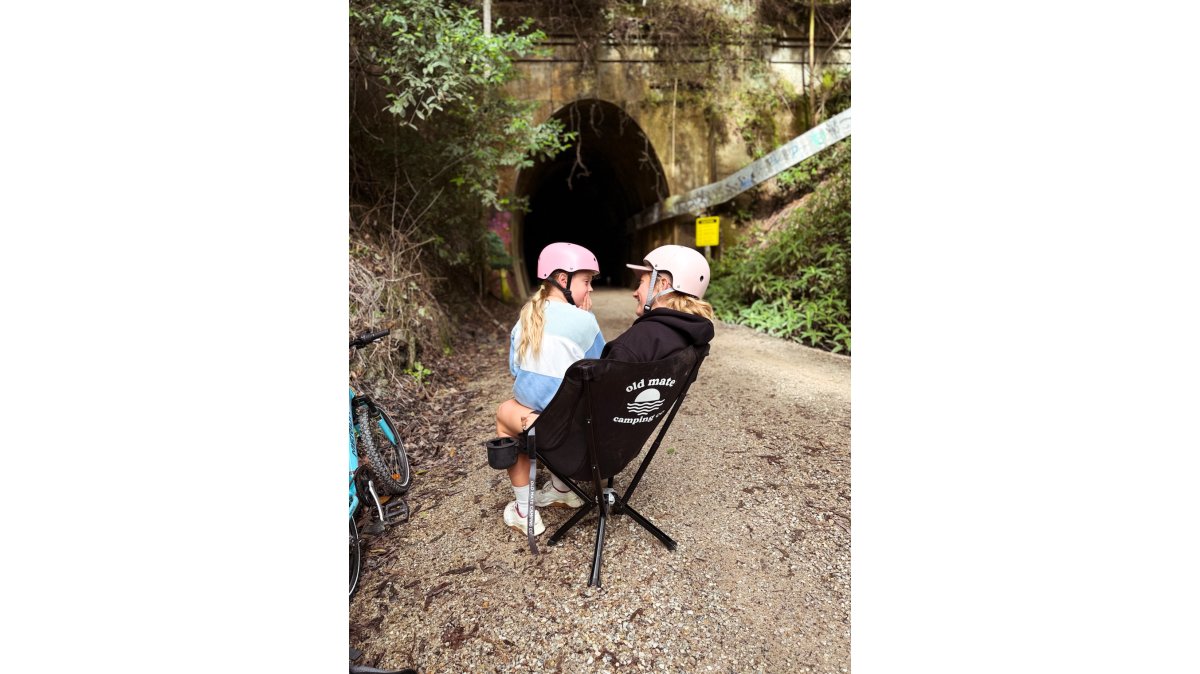
The Old Mate Original is our one product, and it exists because we got sick of heavy chairs. It packs to 44cm long and 8cm wide, weighs 1.8kg, and carries up to 150kg.
The frame is aluminium and the seat is ripstop nylon. It comes in black, with more colours on the way. It sets up in seconds with no instructions needed. It is Australian owned and Australian designed, and we are straight about the fact that it is not Australian made.
What it does well is fit. It drops into a boot gap, straps to a pack, and sits in the footwell of a small car without a fight. It is built for the sideline at netball, a day at the beach, a festival, or a weekend campsite.
What it does not do is feel like a big padded armchair. If you want a wide seat with armrests and a cup holder for a week at the same campsite, a larger chair is the better call and we will happily say so.
It comes with a one year manufacturing warranty and 30 day change-of-mind returns.
Camping Chair Weight Capacity Guide: What 150kg Really Means
Weight capacity is the maximum load a chair is rated to hold. A 150kg rating means the frame and fabric have been built to carry that much. It is a ceiling, not a target, and it says nothing about how the chair feels after three hours.
That second part is the bit most guides skip. A chair can hold you safely and still be uncomfortable, because capacity and comfort are two different measurements.
What the common ratings actually suit
| Rating | Suits | Typical use |
|---|---|---|
| Under 100kg | Lighter adults, teens | Travel and occasional use |
| 100kg to 120kg | Most adults | Standard folding chairs |
| 120kg to 150kg | Larger adults, shared use | Heavier duty compact chairs |
| 150kg plus | Bigger blokes, two kids | Reinforced frames |
If you are a bigger bloke, a 150kg rating gives you real headroom. The gap between your weight and the rating is your safety margin, and a wider margin means less flex in the frame when you sit down.
The weight-to-comfort trade-off nobody explains
Here is the honest version. Every kilogram you save in the frame has to come from somewhere, and it usually comes from the seat.
A 1.8kg chair with a taut ripstop nylon seat spreads your weight across the fabric and the frame. That is comfortable for a few hours. It is not the same as a 5kg padded armchair with a wide seat and armrests, which spreads your weight over a much larger area and lets you sink in.
Neither is better. They are built for different jobs.
- Light and compact (around 1.8kg): best for carrying, best for small cars, comfortable for a few hours at a time.
- Mid weight (3kg to 5kg): a bit more seat area, still car portable, comfortable for a full afternoon.
- Heavy padded (5kg plus): the most comfortable for long sits, but it lives in the caravan or the big boot.
If your trip is a week parked at the same campsite, a heavier padded chair is genuinely the better call. If your trip involves carrying the chair any distance, or fitting it into a small car, the light chair wins on the things that matter for that job.
What shortens a chair's life regardless of rating
Two habits wear out any folding chair faster than the rating suggests.
Dropping into it rather than sitting down puts a shock load through the joints. The frame is rated for your weight, not for your weight arriving at speed.
Twisting sideways while seated loads the frame in a direction it was not designed for. Sit down, do not fall down, and turn your whole body rather than your hips, and the frame lasts.
How to Pack Camping Gear in a Small Car
Most packing guides tell you to put heavy things low and light things high. That is true, and it is also the easy part. The hard part is that a hatchback, a sedan and a small SUV each have a different shape of boot, and a chair that fits one may not fit another. Here is how to work with the boot you actually own.
Measure your boot before you buy anything
Grab a tape measure and check three numbers: the depth from the tailgate to the back of the rear seat, the width between the wheel arches, and the height from the boot floor to the parcel shelf or window line.
A small hatch often gives you 60cm to 80cm of depth and around 90cm to 100cm between the arches. A small sedan is usually deeper but lower, so height becomes the limiting number. A compact SUV tends to be taller, which is where a chair that packs to 44cm by 8cm earns its keep because it can stand upright in a gap rather than lying flat.
Write those three numbers down. They decide what fits long before any product listing does.
Where a 44cm by 8cm chair actually goes
A chair packed to 44cm long and 8cm wide is roughly the size of a rolled up swag strap or a two litre bottle. That shape is the point. It slides into places a 90cm folding chair cannot reach.
- Hatchback: down the side of the boot behind the wheel arch, or upright against the back of the rear seat.
- Sedan: in the footwell behind the front seat, or lengthways along the side of the boot floor.
- Small SUV: standing upright in the gap between the pram and the boot wall, or strapped to a cargo barrier.
- Wagon: flat along the side wall under the window line, where nothing else will sit.
A standard folding chair at around 90cm long has to lie diagonally across the boot. That works, but it eats the space you needed for the esky.
Load order that survives a sudden stop
Start with the heaviest items low and forward, pushed against the back of the rear seat. Esky, water containers and tool boxes go here. They are the items you least want sliding into the cabin.
Next, fill the vertical gaps with long thin items. Chairs, poles and awning bags go down the sides, not flat on top. This is where a compact chair pays for itself, because it uses space that would otherwise sit empty.
Then layer soft gear on top. Sleeping bags, towels and clothing bags squash into the awkward shapes left behind, and a soft bag over a hard case stops things rattling.
A few rules that save space every time:
- Roll soft items instead of folding them flat
- Pack chairs and poles vertically in gaps, not flat on top
- Keep the day bag near the tailgate for easy access
- Put nothing loose on the rear parcel shelf
- Leave the rear window line clear
If you are heading off on a longer trip, the Australian government road safety guidance on loading a vehicle is worth a read before you pack.
Where Compact Camping Chairs Fit Best
Compact chairs suit people who move. That is the whole point of them, and it is where they beat everything else.
They suit small car owners, because the boot is the limit and a 44cm pack respects it. They suit festival goers walking in from a distant car park. They suit parents on the sideline at footy, netball and cricket, where you carry the chair from the car and set it up in under a minute. They suit beach days, where the walk from the car park is half the trip.
They suit four wheel drivers and caravanners who need to save every centimetre of storage. They suit anyone doing the big lap who has learned that space in the vehicle is the real currency.
Where they are not the right call: a week parked at the same campsite with a big group. In that case a larger padded chair with armrests is genuinely the better choice. It is heavier and it takes up more room, and if the car is not moving, neither of those things matters.
For a deeper look at how weight and packed size trade off against each other, the Australian Competition and Consumer Commission guidance on product safety and labelling is a useful reference when you are comparing what different chairs actually claim.
If you want to see how the Old Mate Original measures up for your own boot, the Old Mate Original product page has the full specs.
The hard part with a small car is never the camping, it is the packing. Every centimetre counts, and a chair that folds to 44cm by 8cm gives you back space you did not know you had.
The Old Mate Original is built for exactly that. It weighs 1.8kg, carries up to 150kg, sets up in seconds with no instructions needed, and packs down small enough to slide into a boot gap. It is Australian owned and Australian designed, comes with a one year manufacturing warranty and 30 day change-of-mind returns, and if a bigger chair suits your trip better, we will tell you that too.
Frequently Asked Questions
What is the smallest packable camping chair available in Australia?
Packed size is the number that matters. The Old Mate Original folds down to 44cm long and 8cm wide, roughly the size of a drink bottle, and weighs 1.8kg. That means it slips into a door pocket, under a seat or into a gap beside the pram in the boot. When you compare compact camping chairs, check the packed dimensions rather than the open size, because that is what decides whether it fits in your car.
What weight capacity should I look for in a compact camping chair?
Look for a stated capacity with a margin above your own weight. A 150kg rating, like the Old Mate Original, gives most adults plenty of headroom and suits a bigger bloke without the nerves. As a rule of thumb, aim for at least 20kg to 30kg above your weight so the frame and seat are not working at their limit every time you sit down.
Do compact camping chairs require assembly?
Most compact designs now use a folding frame that opens in one motion, so there are no poles or clips to fiddle with. The Old Mate Original sets up in seconds with no instructions needed, which matters after a four-hour drive. If a chair needs assembly, it usually means loose parts that can go missing in the boot, so check before you buy.
Are lightweight camping chairs comfortable for long periods?
It depends on the seat shape and frame tension, not just the weight. A taut ripstop nylon seat on an aluminium frame gives consistent support, while a slack seat will have you shifting around by the second half. For long sits, look for a seat that stays firm and a frame that does not flex. If you want a big padded armchair for a week at one campsite, that is a great choice too, just not one that packs small.