
Table of Contents
- What Parents Actually Need From a Sideline Chair
- Weight and Packed Size: The Real Test for Game Day
- Weight Capacity, Frame Material and How Long It Lasts
- Setup Time, Ground Stability and Terrain
- Why Do Camping Chairs Sink Into Soft Sand?
- Comfort, Ergonomics and Back Support for Long Games
- Lightweight Folding Chairs for Sports: What to Look For
- A Practical Checklist for Choosing Your Chair
- Frequently Asked Questions
Last Updated: September 25, 2026
What Parents Actually Need From a Sideline Chair
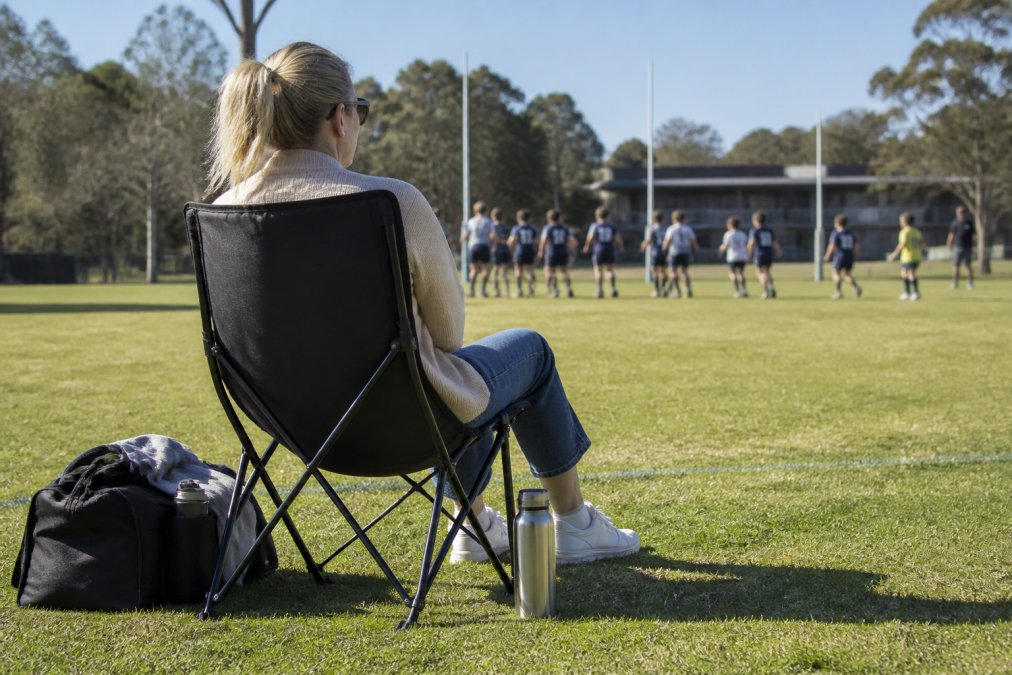
Most parents don't set out to buy portable chairs for youth sports games. They buy one after a cold morning on a wet ground, or after hauling the big camp chair from the boot for the fifth Saturday in a row. At Old Mate Camping Co., we talk to a lot of families who've done both, and the pattern is always the same: the chair that gets left at home is the one that's awkward to carry.

That's the whole problem in one sentence. A chair you don't bring is a chair that does nothing.
So before you look at any specific chair, get clear on what actually matters on game day. It isn't the same list as a week-long camping trip.
The Four Things That Matter Most
Portable chairs for youth sports games live or die on four things:
- Packed size. Can it sit in the boot next to the gear you already carry?
- Carry weight. You're walking from the car park to the field, often with a bag in the other hand.
- Setup time. Nobody wants to wrestle clips while the game is starting.
- Support. A netball game runs about an hour. A cricket match can run all afternoon.
Get those four right and the rest is detail. Get them wrong and the chair stays in the garage.
Weight and Packed Size: The Real Test for Game Day
The best portable chairs for youth sports games are the ones you forget you're carrying. That's the honest test. If a chair is light and folds down small, it comes with you every week. If it isn't, it doesn't.
A full-size camping chair is a great thing for a campsite. It's just not built for a walk across a footy oval. Those chairs tend to be heavier and take up a decent chunk of the boot, which is fine when you're parked next to your tent and less fine when you're parked three streets away.
This is where a compact folding chair earns its place. The Old Mate Original weighs 1.8kg and packs down to 44cm long and 8cm wide, roughly the size of a drink bottle. It fits in the boot alongside the school bags, the esky and the cricket kit instead of fighting them for room.
Weight Capacity, Frame Material and How Long It Lasts
Weight capacity and frame material decide whether a chair lasts two seasons or ten. Both are worth checking before you pay for anything.
Look at the frame first. Aluminium keeps a chair light, which matters when you're carrying it. Powder-coated steel tends to feel sturdier in the hand, and it's a common choice on heavier chairs built to live at one campsite. Neither is wrong. They're just aimed at different jobs.
Then check the stated weight limit against the people who'll actually sit in it. A 150kg capacity, like the Old Mate Original carries, gives most adults plenty of headroom. If you're on the heavier end, a higher stated limit means you're not sitting down wondering about it.
The seat fabric matters too. Ripstop nylon is a common choice on chairs that need to pack down small and still hold their shape. Mesh fabric breathes better on a hot day, which is worth thinking about if you're sitting in the sun for hours.
Setup Time, Ground Stability and Terrain
Setup time is the difference between sitting down and standing around holding a folded chair while the first over is bowled.
A chair that opens in under 15 seconds, with no clips to line up and no poles to thread, is the goal. If you've driven four hours to get there, you want to sit down, not assemble something. The Old Mate Original sets up in seconds with no instructions needed, which is the whole point of a chair that lives in the boot.
Terrain is the part most chair guides skip. It matters more than people expect, and it's the difference between a chair that works every weekend and one that only works on a dry oval.
Why the surface changes everything
A chair doesn't fail because it's badly made. It fails because the ground under it can't do its job. Four legs concentrate your body weight into four small contact points. On firm ground that's fine. On soft ground those points sink, the frame drops, and the seat angle changes underneath you.
Here's how the main surfaces actually behave:
- Hard ground and ovals. Compacted turf, cricket outfields and synthetic surfaces are the easy case. Almost any four-leg chair sits flat and stable. This is what most sideline chairs are designed around, and it's where they perform best.
- Soft sand. The legs sink until the frame bottoms out. The fix is spreading the load across a wider footprint, either through wider feet, a wider stance, or by putting something flat under the legs. A chair with a narrow footprint will always struggle here, no matter how well it's built.
- Sloped ground. A netball court edge, a hill beside a footy oval, a beach dune. A rigid four-leg frame will rock on a slope because only two or three legs carry the weight. Levelling legs or a frame that tolerates a few degrees of tilt help. A standard folding chair won't level itself, and no amount of adjusting the seat will fix a slope.
- Wet grass. Two things happen. Water wicks up through the fabric if the seat sits low, and the ground softens under the legs. Ground clearance keeps you drier, and a wider footprint keeps you from sinking. A mid-morning game after overnight rain is the real test.
- Loose gravel and dirt. Common at country ovals and car park edges. Legs can slide sideways as much as sink. Rubber feet grip better than bare metal ends.
What to check before you buy
Match the chair to the surface you actually sit on most, not the surface in the product photos.
- If your weekends are all local ovals, almost anything stable will do the job.
- If you split your time between the sideline and the beach, prioritise a wider footprint over the narrowest chair you can find.
- If you regularly sit on slopes, look for levelling legs or accept that you'll be hunting for the flattest patch.
- If you play winter sports, think about ground clearance and how the fabric handles damp.
The Old Mate Original uses a four-leg design that stays stable on ovals and uneven ground. It's not a levelling chair, and we won't pretend it is. On a steep slope you'll still want to find the flattest spot you can. That's an honest limit, and it's worth knowing before you buy.
Beach safety guidance from Surf Life Saving Australia
Why Do Camping Chairs Sink Into Soft Sand?
Camping chairs sink into soft sand because the weight of the sitter is concentrated on four small leg ends. Sand can't support that much pressure in one spot, so the legs push straight down until the frame bottoms out.
The fix is spreading the load. Wider feet, a wider stance or a chair designed with sand in mind all help. Sitting on a towel or a flat piece of driftwood under the legs works too, and it's what plenty of people do at the beach.
The Old Mate Original Compact Camping →
It's worth knowing this before you buy, because a chair that's perfect on a footy oval can be frustrating on sand. If your weekends are split between the sideline and the beach, look for a chair with a wider footprint rather than the narrowest one you can find.
Beach safety guidance from Surf Life Saving Australia
Comfort, Ergonomics and Back Support for Long Games
Back support is the feature people underestimate until they've sat through a full day of cricket. A chair can be light and still be comfortable, but it won't happen by accident.
Most portable chairs are built around a simple trade-off: the smaller and lighter they pack, the less structure there is behind your lower back. That's not a flaw, it's physics. The question is whether the chair you're looking at has done anything to work around it.
What actually supports your back
Lower back pain on the sideline usually comes from one of three things: no lumbar curve, a seat that's too low, or a seat that's too deep. Here's what each one does and how to spot it.
- Lumbar support. The seat should hold the natural curve of your lower back rather than let you slump into a C shape. On a folding chair this comes from how the seat fabric is cut and tensioned, not from padding. A seat that sags in the middle gives you nothing to lean against. Run your hand across the seat back before you buy. If it bows away from you in the middle, your lower back will do all the work.
- Seat height. A seat that's too low is hard to get out of and puts more strain on your knees and back. As a rough guide, you want your knees roughly level with your hips when seated, or slightly below. If you're sinking well below that, every stand-up is a small effort, and over a two-hour game those add up.
- Seat depth and width. A seat that's too deep forces you to slouch to reach the backrest. Too narrow and you're shifting around trying to get comfortable. A cushioned seat that's too narrow gets uncomfortable fast, no matter how good the frame is.
- Recline. Some chairs let you lean back. Handy for a long afternoon, less handy if you're up and down chasing a toddler or fetching drinks. A slight recline is usually the sweet spot for sideline use.
- Armrests. They give you somewhere to push up from, which matters if your back or knees aren't what they were. They also add bulk and weight, so it's a genuine trade-off.
How to test a chair before you commit
You can't judge back support from a spec sheet. Here's what to do instead.
- Sit in it for at least five minutes, not five seconds. The first minute tells you nothing.
- Lean back and see whether the seat back meets your lower back or whether there's a gap.
- Stand up and sit down a few times. If it's awkward now, it'll be worse in round 14.
- Check the seat height against your own body, not the average.
- Read what long-term owners say about comfort after a full season, not just the first week.
A chair with proper lumbar support makes a real difference over a two-hour game. It's the difference between standing up stiff and standing up fine.
Product safety guidance from the ACCC
Lightweight Folding Chairs for Sports: What to Look For
Lightweight folding chairs for sports need to balance weight against comfort, and that balance is different for everyone.
A chair can be very light and still hold a high weight limit. Aluminium frames make that possible. The trade-off is usually in the seat padding, so think about how long you'll actually be sitting.
Use this as a quick guide:
| Priority | What to Look For | Why It Matters |
|---|---|---|
| Packed size | Folds to bottle size or similar | Fits the boot without a fight |
| Carry weight | Under about 2kg | Easy walk from car to field |
| Weight capacity | Well above your own weight | Confidence when you sit down |
| Frame material | Aluminium or powder-coated steel | Light versus sturdy, pick your job |
| Setup | Under 15 seconds, no clips | You sit down before the game starts |
| Support | Lumbar support, sensible seat height | Comfort over a long game |
| Fabric | Ripstop nylon or mesh | Durability and breathability |
| Extras | Carry bag, cup holder, storage pocket | Small things that get used weekly |
The Old Mate Original ticks most of that list: 1.8kg, 150kg capacity, aluminium frame, ripstop nylon seat, under 15 seconds to set up, and it comes with a carry bag and an extra-large silicone cup holder. It's $148 AUD, and it's backed by a one-year manufacturing warranty and 30-day change-of-mind returns.
Where it won't suit everyone: if you want a big padded chair with armrests and a footrest for a week at one campsite, a full-size camping chair is a better fit for that job. That's a genuinely good choice for that kind of trip. We're the chair for people who need it small and light.
Product safety guidance from the ACCC
A Practical Checklist for Choosing Your Chair
Work through this before you buy, and you'll avoid the most common mistake: buying for the campsite when you need a chair for the sideline.
- Measure the free space in your boot. Write the number down.
- Weigh what you're happy to carry from the car park to the field.
- Check the stated weight capacity against the heaviest person who'll use it.
- Read the frame material and decide light versus sturdy for your main use.
- Look for a stated setup time, and be sceptical of anything vague.
- Check the seat has lumbar support if anyone using it has a bad back.
- Think about your surfaces: oval, sand, slope or wet grass.
- Confirm what's included: carry bag, cup holder, storage pocket.
- Check the warranty and the returns policy.
- Read long-term reviews, not just first-week ones.
Most families end up buying the wrong chair because they shop for a campsite when they need something for a footy oval. Different job, different chair.
If your job is a chair that lives in the boot and comes out every weekend, the Old Mate Original is built for exactly that. It packs down to 44cm by 8cm, weighs 1.8kg, holds up to 150kg, and sets up in under 15 seconds. It's Australian owned and designed, and it comes with a carry bag and a one-year manufacturing warranty.
Get started with Old Mate Camping Co. and stop leaving the chair at home.
Frequently Asked Questions
What features should I look for in a sports sideline chair?
Look at four things: packed size, weight, setup time and weight capacity. A chair that packs to around 44cm long and 8cm wide fits in a packed boot without a fight. Weight matters too, since you may carry it from the car park to the far side of the ground. Check the frame material (aluminium keeps things light), the seat fabric (ripstop nylon resists wear), and whether a carry bag and cup holder are included. Ground stability on grass and a weight limit that suits every family member round out the list.
How much weight should a portable camping chair support?
Aim for a chair rated well above the heaviest person who will use it. The Old Mate Original is rated to 150kg, which gives most adults plenty of headroom. A higher rating usually points to a stronger frame and better stitching, so it is a useful signal of build quality even if you are nowhere near the limit. If you are on the heavier end, choose a chair with a stated capacity you are comfortable with rather than one that only just covers you.
Are lightweight chairs stable on uneven grass?
They can be, and it comes down to the base. A four-leg design spreads weight across a wider footprint than a three-leg frame, which helps on bumpy or sloped ground. Light weight itself is not the problem; a poor base is. On hard, flat ovals most compact chairs sit fine. On softer ground, press each leg down before you sit so the chair settles evenly. The Old Mate Original uses a four-leg design with a 150kg capacity, which keeps it steady on typical sideline turf.
How do I keep my camping chair from sinking into soft ground?
The fix depends on the surface. On soft sand, the issue is that a narrow leg concentrates your body weight onto a small area, so it pushes straight down. Wider feet or a base plate spread that load and slow the sink. On damp grass, press the legs in firmly before sitting so the chair settles level. If you are regularly on sand, look for a chair with broader leg ends, or place a flat object under each leg to widen the contact point.